

Table of Contents
- Understanding Your Acne-Prone Skin
- Choosing the Best Cleanser for Acne
- Key Acne Treatment Ingredients to Know
- Building Your Complete Skin Care Routine for Acne-Prone Skin
- Professional Acne Treatments for Stubborn Breakouts
- Realistic Timelines and Tracking Your Progress
- What Not to Do: Common Mistakes With Acne-Prone Skin
- Frequently Asked Questions
Last Updated: October 5, 2026
Understanding Your Acne-Prone Skin
Acne-prone skin requires a different approach than other skin types. At Acne Clinic By Justina, we understand the struggle with persistent blemishes, clogged pores, and the frustration of trying product after product without results.
The key difference is this: acne-prone skin isn’t just oily or sensitive. It’s a skin condition that responds to specific triggers, bacteria, excess oil, dead skin cells, and inflammation all play a role.
Most people make the same mistake: they treat acne-prone skin too aggressively. They strip it clean, use harsh actives, and wonder why their skin gets worse. The real path forward is gentler than you’d think, but smarter about ingredients.
Your skin barrier is your defense system. When you damage it with harsh products, your skin produces more oil and becomes more inflamed. Protect your barrier, and breakouts decrease naturally.
Choosing the Best Cleanser for Acne
A good cleanser is the foundation of any routine for acne-prone skin. It removes dirt, oil, and impurities without stripping your skin or triggering irritation. The best cleanser for acne does one job well: it cleans without overdoing it.
Look for cleansers labeled non-comedogenic, which means they won’t clog pores. A gentle cleanser works better than a foaming one for most people with acne-prone skin, even though foaming cleansers feel like they’re “doing more.”
Gentle Cleansing vs. Aggressive Scrubbing
Aggressive scrubbing damages your skin barrier and worsens acne. Stop using physical scrubs or harsh exfoliating cleansers if you have acne-prone skin. Your skin doesn’t need to feel squeaky clean, that tight feeling means you’ve stripped away protective oils.
Gentle cleansing means:
- Use lukewarm water, not hot
- Massage your cleanser in for 30-60 seconds
- Pat dry gently, don’t rub
- Cleanse twice daily: morning and night
A gentle cleanser removes excess oil and impurities while keeping your skin’s natural moisture intact. This is what allows your skin barrier to heal and your breakouts to decrease.
Oil Control Without Stripping the Skin Barrier
Your skin produces oil for a reason, it protects and hydrates. When you strip all the oil away, your skin overcompensates by producing even more. This cycle makes acne worse, not better.
The goal is balance. Control excess oil without destroying your barrier:
- Use a cleanser formulated for oily or acne-prone skin
- Avoid products with high alcohol content
- Don’t over-cleanse (twice daily is enough)
- Follow with a lightweight, non-comedogenic moisturizer
When your barrier is intact, your skin regulates oil production naturally. You’ll see less shine and fewer breakouts.
Key Acne Treatment Ingredients to Know
Certain ingredients have real evidence behind them for treating acne. They work by unclogging pores, reducing bacteria, or calming inflammation. Knowing what these do helps you choose products that actually address your breakouts.
Salicylic Acid and Pore Exfoliation
Salicylic acid is a beta hydroxy acid (BHA) that exfoliates inside the pore. It dissolves the oil and dead skin cells that clog pores and create blemishes. This is why it’s so effective for acne-prone skin, it targets the root cause.
Salicylic acid works best at concentrations of 0.5% to 2%. Start with a lower concentration if your skin is sensitive. Use it 3-4 times per week initially, then increase frequency as your skin adjusts. Many people see improvement in pore appearance and fewer breakouts within 4-6 weeks.
Common side effects include mild dryness and sensitivity. This is normal. If irritation is severe, reduce frequency or concentration.
Do NOT combine salicylic acid with benzoyl peroxide in the same product or at the same time. The combination can cause excessive irritation and damage your barrier.
Benzoyl Peroxide for Blemish Control
Benzoyl peroxide kills acne-causing bacteria and reduces inflammation. It’s one of the few ingredients with decades of clinical evidence for treating active acne. It works differently than salicylic acid, it targets bacteria rather than oil.
Use 2.5% to 10% benzoyl peroxide. Start low and increase if needed. Apply once or twice daily to affected areas. Many people see results within 2-3 weeks.
Benzoyl peroxide can bleach fabrics and cause dryness. It also makes your skin more sensitive to sun exposure, so use SPF 30+ daily. If you have darker skin tones, patch test first because benzoyl peroxide can sometimes cause irritation or temporary darkening.
Vitamin C and Ferulic Acid for Healing
Vitamin C (ascorbic acid) supports skin healing and reduces inflammation. Ferulic acid enhances vitamin C’s effectiveness. Together, they help fade post-inflammatory marks and support your skin’s natural repair process.
Use vitamin C serums in the morning before sunscreen. Stability matters, look for products in opaque bottles that have been stored properly. Vitamin C oxidizes quickly when exposed to air and light, so choose products with good packaging.
Results take time with vitamin C. Most people see improvements in skin texture and tone after 8-12 weeks of consistent use.
Building Your Complete Skin Care Routine for Acne-Prone Skin
A complete routine for acne-prone skin has a specific order. Products work better when applied in the right sequence, and active ingredients need time to absorb before the next step.
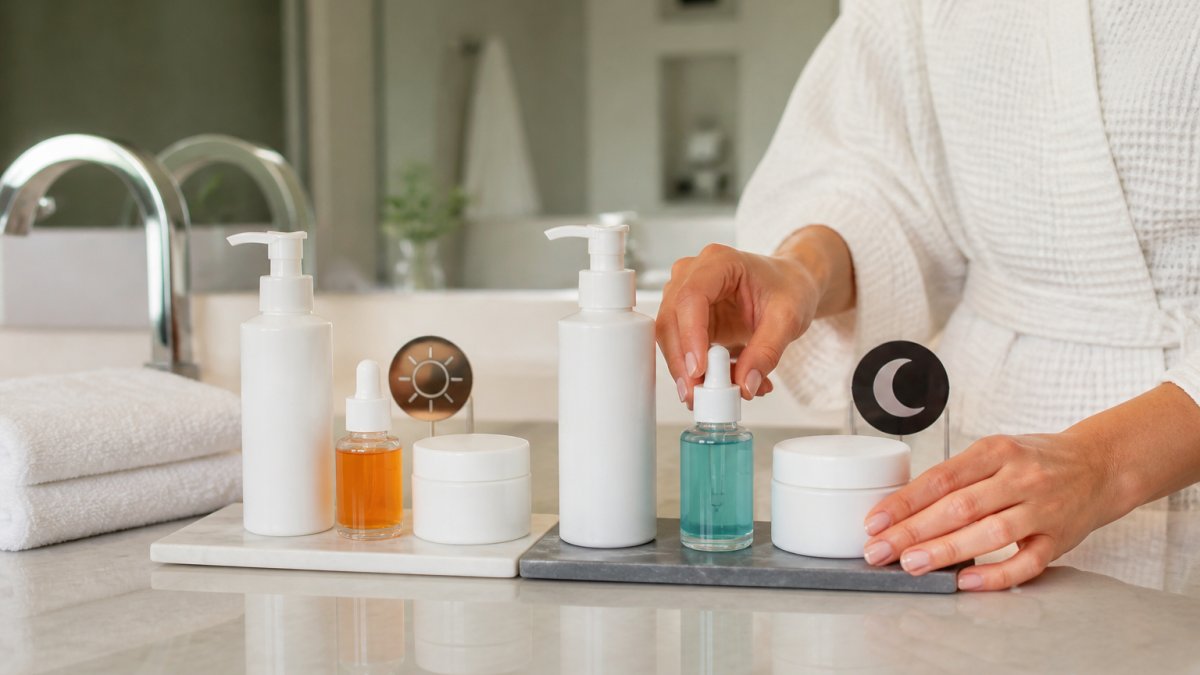
Morning Routine: Cleanse, Treat, Protect
Your morning routine should take 5-10 minutes. Keep it simple and consistent.
Step 1: Cleanse (1 minute)
Use your gentle cleanser with lukewarm water. Massage for 30-60 seconds. Pat dry.
Step 2: Treat (optional, 1 minute)
If using vitamin C serum, apply now. Let it dry for 1-2 minutes before the next step.
Step 3: Moisturize (1 minute)
Use a lightweight, non-comedogenic moisturizer. This is essential even for oily, acne-prone skin. It keeps your barrier healthy.
Step 4: Protect (1 minute)
Apply SPF 30 or higher (the American Academy of Dermatology). Sun exposure worsens post-inflammatory marks and makes acne scars more visible. This step is non-negotiable.
Evening Routine: Deep Cleanse, Active Ingredients, Hydration
Your evening routine is where active treatment happens. You have more time, and your skin repairs itself at night.
Step 1: Cleanse (1-2 minutes)
Use the same gentle cleanser. Take your time. Remove all impurities and makeup.
Step 2: Apply Active Treatment (1 minute)
This is where salicylic acid or benzoyl peroxide goes. Apply to affected areas. Let it dry completely before the next step.
Step 3: Moisturize (1 minute)
Use your lightweight moisturizer. This protects your barrier while active ingredients work.
Step 4: Optional: Targeted Serum (1 minute)
If using additional treatments like vitamin C or niacinamide, apply here after moisturizer dries.
How to Introduce Active Ingredients Safely
Introducing actives too quickly causes irritation and makes people abandon routines. Go slow.
Week 1-2: Start with your cleanser and moisturizer only. Let your skin adjust.
Week 3-4: Add one active ingredient. Use it 2-3 times per week. This might be salicylic acid or benzoyl peroxide, not both.
Book Skincare Services in Townsquare →
Week 5-6: Increase frequency to 4-5 times per week if your skin tolerates it well.
Week 7+: Once your skin is stable, you can add a second active ingredient.
Signs of irritation include redness, burning, excessive dryness, or worsening breakouts. If you experience these, reduce frequency or stop the product. Your skin barrier matters more than rushing results.
The fastest path to clear skin is consistency over intensity. A routine you can stick with for 8-12 weeks beats an aggressive routine you abandon after 2 weeks.
Professional Acne Treatments for Stubborn Breakouts
Over-the-counter products work for mild to moderate acne. For severe, persistent, or scarring acne, professional treatments deliver faster results.
When Over-the-Counter Care Isn’t Enough
You’ve given your routine 8-12 weeks. You’re consistent. Your skin hasn’t improved, or it’s gotten worse. This is when professional help matters.
Professional treatments are necessary if you have:
- Severe, painful cystic acne
- Acne that covers large areas of your face or body
- Acne that’s causing scarring
- Acne that hasn’t responded to 2-3 different routines
- Hormonal acne that flares with your cycle
At Acne Clinic By Justina, we evaluate each patient’s skin individually. Some people need medication. Others benefit from professional-grade treatments combined with customized skincare. The key is addressing the root cause, not just treating symptoms.
Medical-Grade Options and Customized Plans
Medical-grade treatments for acne-prone skin include:
Chemical peels: Remove dead skin and unclog pores.
Light-based treatments: Target bacteria and reduce inflammation. Multiple sessions needed.
Prescription medications: Oral antibiotics, retinoids, or hormonal treatments for cases that need more than topical care.
Professional extractions: Done safely to prevent scarring and infection.
Each treatment works differently. Some patients need one approach. Others benefit from combining treatments with a customized skincare routine. Professional guidance ensures you’re using the right treatment for your specific skin.
Realistic Timelines and Tracking Your Progress
Patience is the hardest part of treating acne-prone skin. Here’s what realistic timelines look like.
Weeks 1-2: No visible change. Your skin is adjusting to new products.
Weeks 3-4: You might notice smaller breakouts or less oiliness. This is progress.
Weeks 5-8: Most people see a 30-50% reduction in active breakouts. Texture improves slightly.
Weeks 8-12: Significant improvement. New breakouts are smaller and less frequent. Post-inflammatory marks start fading.
Months 3-6: Skin is much clearer. Scars become less visible. You’re maintaining clear skin with your routine.
Track your progress with photos.
Expect setbacks. Stress, hormones, and diet can trigger breakouts even when your routine is solid.
What Not to Do: Common Mistakes With Acne-Prone Skin
The mistakes people make with acne-prone skin usually make things worse.
Don’t over-cleanse. Twice daily is enough. More frequent cleansing strips your barrier.
Don’t mix too many actives. One or two at a time.
Don’t skip moisturizer. Acne-prone skin still needs hydration. A lightweight, non-comedogenic moisturizer is essential.
Don’t pick or squeeze. This spreads bacteria, causes scarring, and extends healing time.
Don’t use expired products. Vitamin C oxidizes. Benzoyl peroxide loses potency.
Don’t expect overnight results. Acne takes 8-12 weeks to improve noticeably.
Don’t ignore sun protection. SPF prevents post-inflammatory marks from becoming permanent scars.
Clear, healthy skin is achievable.
| Timeline | What to Expect | Action |
|---|---|---|
| Weeks 1-2 | Skin adjusting to products | Continue routine, no changes yet |
| Weeks 3-4 | Smaller breakouts, less oil | Routine is working, stay consistent |
| Weeks 5-8 | 30-50% fewer breakouts | Increase active ingredient frequency if tolerated |
| Weeks 8-12 | Significant improvement, texture better | Maintain routine, consider professional treatment if needed |
| Months 3-6 | Skin much clearer, scars fading | Professional treatments accelerate results |
For acne that doesn’t respond to routine care, the American Academy of Dermatology’s acne treatment guidelines recommend professional evaluation.
Frequently Asked Questions
What is the most effective cleanser for acne-prone skin?
The best cleanser for acne removes excess oil and impurities without stripping the skin barrier. Look for gentle, non-comedogenic formulas that contain salicylic acid or benzoyl peroxide to unclog pores and prevent breakouts. Foaming cleansers work well for oily skin, while cream-based options suit sensitive or dry acne-prone skin. Avoid harsh scrubbing, which can worsen irritation and redness. A professional aesthetician can recommend a cleanser matched to your specific skin type and concerns.
How should you build a skin care routine for acne-prone skin?
A complete routine includes morning and evening steps. Morning: cleanse gently, apply a treatment product with active ingredients if tolerated, then moisturize and use sunscreen. Evening: cleanse thoroughly to remove dirt and oil, apply targeted acne treatment ingredients like salicylic acid or benzoyl peroxide, then hydrate with a non-comedogenic moisturizer. Introduce active ingredients slowly, starting once or twice weekly, and increase frequency only if your skin tolerates it well. Consistency matters more than complexity.
Which acne treatment ingredients actually work, and when should you use them?
Salicylic acid exfoliates inside pores to prevent clogged pores and breakouts. Benzoyl peroxide kills acne-causing bacteria and reduces blemishes. Vitamin C with ferulic acid supports healing and reduces redness. Start with one active ingredient at low concentration, then add others gradually over weeks. Use salicylic acid in the morning or evening, benzoyl peroxide at night to avoid irritation, and vitamin C in the morning for antioxidant protection. If you experience excessive dryness or irritation, reduce frequency or consult a professional.
When should you see a professional about acne that won’t clear?
Seek professional care if over-the-counter products haven’t improved your skin after 6-8 weeks of consistent use, if acne is painful or cystic, or if you’re concerned about scarring. A licensed aesthetician or dermatologist can assess your individual skin, recommend medical-grade treatments, and create a customized plan. Professional treatments can target stubborn blemishes, prevent acne scarring, and address underlying causes that self-care alone cannot resolve.