Last Updated: November 22, 2026
Quick Summary
You need professional acne treatment when acne is painful, widespread, scarring, or unchanged after two to three months of consistent over-the-counter care. Other red flags include deep cysts, breakouts returning in the same spots, and worsening irritation.
- Eight to twelve weeks with no change from OTC products means the routine misses the cause.
- Deep, painful cysts or nodules rarely respond to creams and need a dermatologist evaluation.
- See a dermatologist when acne is painful, widespread, scarring, or unchanged after two to three months.
- A dermatologist can diagnose acne and prescribe medication, while an esthetician focuses on professional treatments and maintenance.
- Picking or squeezing deep lesions at home is the fastest route to permanent scarring.
Table of Contents
- 7 Signs You Need Professional Acne Treatment
- When Should You See a Dermatologist for Acne?
- Dermatologist or Esthetician for Acne: Which Is Right for You?
- Frequently Asked Questions
7 Signs You Need Professional Acne Treatment
Persistent acne that resists a consistent over-the-counter routine is the clearest signal that professional acne treatment may be needed. (Source: American Academy of Dermatology Association)

1. OTC products stop working. Eight to twelve weeks with no change means the routine misses the cause. 2. Breakouts keep returning in the same spots, suggesting an underlying trigger. 3. Deep, painful cysts or nodules rarely respond to creams. 4. Acne spreading across the face or body needs a treatment plan. 5. Scars or dark marks forming, early treatment helps prevent scarring. 6. Adult-onset or hormonal acne often traces to hormonal shifts, stress, or diet. 7. Worsening irritation, burning, peeling, and redness point to a damaged skin barrier. When irritation signals a compromised skin barrier, careful evaluation matters as much as the treatment itself, a principle that also applies to quality aesthetic treatments.
Before booking, learn which ingredients actually treat acne via this guide to ingredients in skin care products for acne treatment, and check whether pore-clogging ingredients in skin care work against you.
When Should You See a Dermatologist for Acne?
See a dermatologist when acne is painful, widespread, scarring, or unchanged after two to three months of consistent over-the-counter care. A first appointment covers skin history, lesion types, and triggers; see professional acne treatment plan costs and the clinic’s skincare services.
Watch out: picking or squeezing deep lesions at home is the fastest route to permanent scarring.
Dermatologist or Esthetician for Acne: Which Is Right for You?
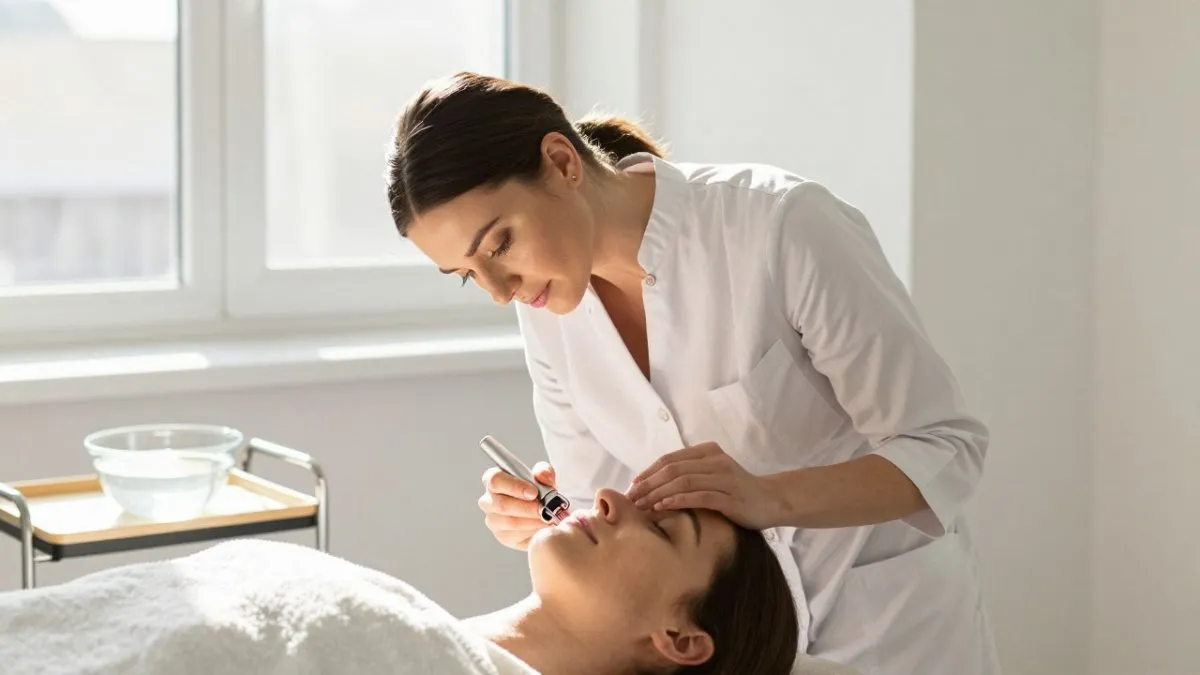
A dermatologist is a physician who can diagnose acne, prescribe medication, and manage severe or hormonal cases; an esthetician focuses on skin health through professional treatments, product guidance, and maintenance. Many people benefit from both; a starter kit for acne gives readers a structured routine.
| Sign | What It Suggests | Next Step |
|---|---|---|
| No change after 8-12 weeks | Routine mismatch | Skin consultation |
| Deep, painful cysts | Possible cystic acne | Dermatologist evaluation |
| New scars or dark marks | Risk of permanent changes | Prompt professional care |
Persistent acne rarely resolves by trying one more product. Acne Clinic by Justina offers personalized treatment plans, medical-grade skincare, and guidance on hygiene, diet, and daily routine, with licensed staff who speak English, Spanish, Tagalog, and Ilonggo. Get started with Acne Clinic by Justina and build a routine that finally fits your skin.
Frequently Asked Questions
How bad does acne have to be to see a dermatologist?
There is no strict severity threshold. A good rule is to seek professional acne treatment if you have painful cysts, widespread breakouts, or acne that leaves scars or dark marks. Even mild acne that has not improved after 8 to 12 weeks of consistent over-the-counter care is a valid reason to book a consultation. A skin specialist can assess your acne severity and build a treatment plan before damage becomes permanent.
Is it better to see a dermatologist or an esthetician for acne?
It depends on your acne type. A dermatologist can prescribe medication and manage severe or cystic acne. A licensed esthetician at a corrective skincare clinic can handle non-prescription professional treatments and skincare guidance for persistent breakouts. Many people combine both. At Acne Clinic by Justina, licensed staff can help you understand your skin concerns and discuss the right path for your needs.
Can professional acne treatment help prevent acne scars?
Yes. Treating active acne early is one of the most reliable ways to prevent scarring. If scars or dark marks have already formed, a skin professional can discuss treatment options to address texture and discoloration. A consultation with a qualified professional can help determine which options may suit your skin and history.