
Table of Contents
- Understanding Teen Acne: Causes and Types
- Building an Acne Skincare Routine for Teens
- Benzoyl Peroxide for Teen Acne: Safe Use and Expectations
- Acne Treatment for Sensitive Teen Skin
- Prescription Acne Treatment for Teens: When and Why
- Personalizing Your Approach: A Teen-Focused Decision Framework
- Mistakes to Avoid When Treating Teen Acne
- Frequently Asked Questions
Last Updated: October 11, 2026
Understanding Teen Acne: Causes and Types
Teen acne stems from hormonal changes during puberty. Understanding what drives breakouts helps teens and caregivers choose the right treatment approach.
How Hormonal Changes Drive Teen Acne
Hormones trigger increased oil production. This excess oil, combined with dead skin cells, clogs pores and creates an environment where acne bacteria thrive, resulting in blackheads, whiteheads, and inflammatory bumps.
Hormonal acne peaks during the teenage years because puberty floods the body with androgens, signaling oil glands to produce more sebum. For many teens, this normalizes by the early twenties; for others, hormonal fluctuations continue into adulthood.
Common Acne Types: Blackheads, Whiteheads, and Inflammatory Acne
Blackheads form when pores clog but stay open to the air; the dark color comes from oxidation, not dirt. Whiteheads are closed comedones where the pore clogs completely. Both are non-inflammatory.
Papules are small, firm, red bumps without a visible center; pustules have a white or yellow head filled with pus. Both hurt more and scar easily if picked.
Cystic acne sits deeper in the skin, forming large, painful nodules when inflammation reaches deeper layers. It almost always needs professional treatment.
Knowing your acne type matters. Blackheads respond well to exfoliating ingredients like salicylic acid. Inflammatory acne needs different tools, like benzoyl peroxide or prescription options.
Building an Acne Skincare Routine for Teens
A solid skincare routine prevents acne from worsening and supports treatment: cleanse gently, treat with active ingredients, moisturize, and protect from sun damage.
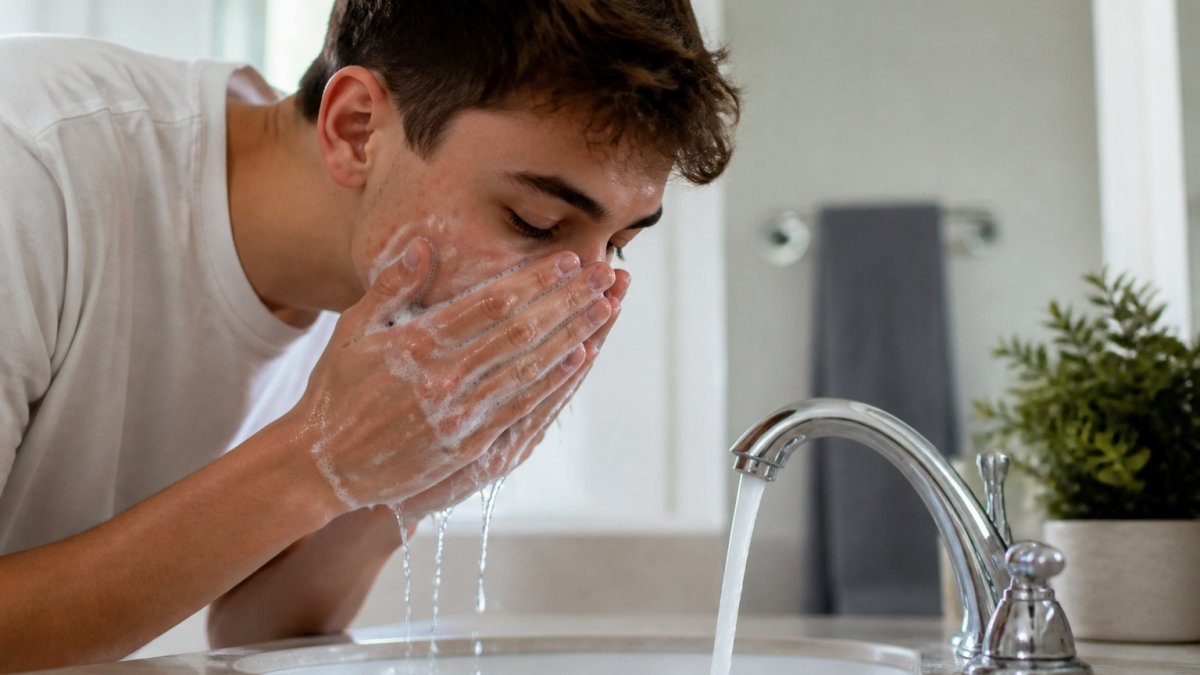
Gentle Cleansing as the Foundation
Harsh scrubbing and strong soaps strip the skin and trigger more oil production. Gentle cleansing removes dirt and excess oil without damaging the barrier.
The routine is straightforward:
- Wash twice daily with a gentle cleanser
- Use lukewarm water, not hot
- Massage the cleanser in for 20-30 seconds
- Rinse thoroughly and pat dry with a clean towel
Look for cleansers labeled “non-comedogenic” and “for acne-prone skin.” These won’t clog pores. Avoid products with fragrance or alcohol, which irritate acne-prone skin.
Moisturizing Acne-Prone Skin Without Clogging Pores
Acne-prone skin still needs moisture. Skipping moisturizer causes dryness and irritation, triggering more oil production as the skin compensates.
Use an oil-free moisturizer designed for acne-prone skin, applied to damp skin right after cleansing to lock in hydration without heavy oils.
Key features to look for:
- Oil-free or non-comedogenic formula
- Lightweight texture
- Hyaluronic acid or glycerin for hydration
- No fragrance
Moisturizing is especially important when using active acne treatments, as these ingredients cause dryness and irritation. A good moisturizer reduces side effects and improves tolerance.
Daily Sun Protection with Broad-Spectrum SPF 30+
Sun exposure darkens acne scars and triggers inflammation in acne-prone skin. Daily sunscreen is essential.
Use a broad-spectrum sunscreen with SPF 30 or higher. Apply it every day, even on cloudy days. Reapply every two hours if spending time outdoors.
Look for:
- Broad-spectrum protection (blocks UVA and UVB)
- SPF 30 minimum
- Oil-free formula
- Non-comedogenic label
A basic routine, gentle cleanser, acne treatment, oil-free moisturizer, and daily sunscreen, prevents acne from worsening and supports any active treatment you add.
Benzoyl Peroxide for Teen Acne: Safe Use and Expectations
Benzoyl peroxide is one of the most effective over-the-counter acne treatments, backed by decades of research, but requires the right approach to use safely.
How Benzoyl Peroxide Works Against Acne Bacteria
Benzoyl peroxide kills acne bacteria by releasing oxygen into the pore, while shedding dead skin cells and reducing oil production, a triple action highly effective against inflammatory acne.
Unlike antibiotics, bacteria cannot build resistance to benzoyl peroxide, so it remains effective long-term. Most teens see visible improvement within 4-8 weeks.
Starting Low and Building Tolerance
Benzoyl peroxide is strong. Starting with too high a concentration causes redness, dryness, and irritation that discourages continued use.
The safe approach:
- Start with 2.5% concentration
- Use it once daily in the evening
- Apply a pea-sized amount to clean, dry skin
- Wait 20 minutes after cleansing before applying
- Use an oil-free moisturizer afterward
- After one week of no irritation, increase to twice daily
- After two weeks, consider moving to 5% if needed
Common mistakes to avoid:
- Using too much product (more isn’t better)
- Applying to wet skin (reduces effectiveness)
- Skipping moisturizer (causes excessive dryness)
- Increasing strength too quickly
If irritation develops, dial back to once daily or lower concentration. Consistency matters more than strength.
Benzoyl peroxide can bleach fabrics and hair. Apply it carefully to avoid contact with clothing, pillowcases, or hair. Wash hands thoroughly after application.
Acne Treatment for Sensitive Teen Skin
Sensitive skin requires a different approach. Active ingredients that work for other teens may cause problems for sensitive skin types.
Patch Testing Active Ingredients First
Before using any new acne treatment on the entire face, patch test it first. This prevents a bad reaction from affecting your whole face.
Patch testing steps:
- Choose a small area (inner arm or behind the ear)
- Apply a tiny amount of the product
- Wait 24-48 hours
- Watch for redness, swelling, or itching
- If no reaction, it’s usually safe to use on the face
This simple step prevents wasted money and painful reactions.
For sensitive skin, start with the gentlest options: salicylic acid at 0.5-1%, benzoyl peroxide at 2.5%, niacinamide, or azelaic acid.
Avoid multiple active ingredients at once. Layer one treatment at a time, waiting weeks before adding another.
Managing Dryness and Skin Irritation
Dryness, redness, or flaking indicate the treatment is too strong or the skin barrier is compromised.
When irritation appears, reduce frequency to every other day, lower concentration, add a hydrating serum with hyaluronic acid, skip other active ingredients temporarily, and use a soothing moisturizer with ceramides.
If irritation persists after these adjustments, stop the treatment and consult a dermatologist. Forcing a treatment through irritation damages the skin barrier and makes acne worse.
Prescription Acne Treatment for Teens: When and Why
Over-the-counter treatments work for mild to moderate acne. When acne is severe, widespread, or leaves scars, prescription options become necessary.
Topical Retinoids and Adapalene for Moderate Acne
Topical retinoids are prescription-strength vitamin A derivatives. They unclog pores, reduce oil production, and boost skin cell turnover. Results take 8-12 weeks but are often dramatic.
Adapalene is a gentler retinoid available both over-the-counter (at lower strength) and by prescription. It causes less irritation than tretinoin, making it ideal for sensitive teen skin.
Retinoid side effects include dryness, flaking, increased sun sensitivity, temporary worsening of acne (the “retinization” phase), and redness.
Oral Medications and Professional Guidance
Oral antibiotics treat moderate inflammatory acne. They reduce bacteria and inflammation from the inside. Common options include doxycycline and minocycline.
Oral contraceptives help hormonal acne in teens with female reproductive systems. They regulate hormones and reduce oil production.
For severe, cystic acne, isotretinoin (Accutane) is the most effective treatment. It can clear acne permanently.
Any prescription treatment requires a dermatologist consultation. A dermatologist assesses acne severity, reviews medical history, and monitors for side effects.
Prescription treatments work best for moderate to severe acne, cystic acne, or acne that leaves scars. A dermatologist can determine if prescription options are right for your situation.
Personalizing Your Approach: A Teen-Focused Decision Framework
The right acne treatment depends on acne severity, skin sensitivity, and individual response. This framework helps teens and caregivers make informed choices.
Assessing Acne Severity and Choosing Your Starting Point
Mild acne means a few blackheads or whiteheads on the T-zone. Moderate acne includes inflammatory bumps across multiple areas. Severe acne is widespread, painful, or includes cystic lesions.
Use this table to find your starting point:
| Acne Severity | Characteristics | Recommended First Step |
|---|---|---|
| Mild | Few blackheads or whiteheads | Gentle cleanser + salicylic acid or benzoyl peroxide 2.5% |
| Moderate | Inflammatory bumps on multiple areas | Benzoyl peroxide 2.5-5% + gentle routine |
| Severe | Widespread or cystic acne | See a dermatologist for prescription options |
Moderate acne needs stronger treatment. Benzoyl peroxide at 2.5-5% combined with a gentle routine works for most teens.
Severe acne requires professional evaluation. A dermatologist can prescribe topical retinoids, oral antibiotics, or other options based on acne type and skin characteristics.
Treatment Timelines and Tracking Progress
Acne doesn’t clear overnight. Knowing realistic timelines prevents frustration and helps teens stick with treatment.
Expected timelines:
- Weeks 1-2: Skin may look slightly worse as treatment brings bacteria to the surface
- Weeks 3-4: First signs of improvement appear
- Weeks 6-8: Noticeable reduction in active acne
- Weeks 12+: Maximum improvement visible
Tracking progress helps teens see real changes. Take photos in consistent lighting every two weeks to compare side by side.
Keep a simple log: date started, product name and concentration, side effects, weekly observations, and photos every two weeks.
This log helps identify what works and supports conversations with a dermatologist if needed.
Addressing Acne Scars and Post-Acne Marks
Active acne treatment prevents new scars. But many teens already have marks from previous breakouts. These respond to different treatments.
Atrophic scars need professional treatment such as microneedling, chemical peels, laser therapy, or dermal fillers.
At Acne Clinic by Justina, we offer personalized acne treatments that combine professional guidance with medical-grade skincare to address both active acne and lingering marks.
Mistakes to Avoid When Treating Teen Acne
Common pitfalls derail even the best treatment plans. Knowing these mistakes helps teens stay on track.
Picking or squeezing pimples pushes bacteria deeper and causes scarring.
Switching treatments too quickly prevents any single treatment from working. Most need 6-8 weeks to show results.
Using too many active ingredients at once causes irritation and prevents identifying which ingredient caused problems.
The biggest mistake is expecting instant results or jumping between treatments. Acne treatment takes consistency and patience.
If breakouts persist despite a consistent routine, or if acne is severe and painful, scheduling a consultation with a dermatologist is the next step. At Acne Clinic by Justina, the team specializes in personalized acne treatments and can assess your skin, recommend options if needed, and provide medical-grade skincare products. Check our services to learn how professional guidance can accelerate your results and help prevent lasting scars.
Frequently Asked Questions
What are the most common acne triggers for teenagers?
Teen acne is triggered by multiple factors working together. Hormonal changes during puberty increase oil production, which clogs pores and creates an environment where acne bacteria thrive. Stress, diet high in refined carbohydrates, friction from tight clothing or sports equipment, and certain skincare products can all worsen breakouts. Environmental factors like humidity and touching your face also play a role. Identifying your personal triggers, whether hormonal patterns, specific foods, or stress, helps you build a more effective personalized treatment plan.
How should a teenager build a simple acne skincare routine?
Start with three steps: a gentle cleanser morning and night, an acne treatment (like benzoyl peroxide or salicylic acid), and a lightweight, oil-free moisturizer. If you have sensitive skin, begin with the lowest concentration of active ingredients and patch test first. Always use broad-spectrum SPF 30+ daily, even on cloudy days. Consistency matters more than complexity, stick with the same routine for at least 6 to 8 weeks before expecting visible improvement. If breakouts persist or worsen, consult a dermatologist about prescription options or professional treatments.
When should a teenager see a dermatologist for acne?
See a dermatologist if over-the-counter treatments haven’t improved your acne after 8 to 12 weeks, if you have moderate to severe inflammatory acne with papules and pustules, if acne is affecting your emotional wellbeing and confidence, or if you’re developing acne scars. A dermatologist can prescribe topical retinoids, oral medications, or recommend professional treatments. Early professional intervention prevents permanent scarring and helps you achieve clearer skin faster than waiting months for over-the-counter products to work.
How can acne treatment be adjusted for sensitive teen skin?
If your skin is sensitive, start with lower concentrations of active ingredients and introduce them one at a time, waiting 1 to 2 weeks between additions. Patch test new products on a small area of skin first to check for irritation or allergic reactions. Use a fragrance-free, hydrating moisturizer to prevent dryness and barrier damage from acne treatments. Avoid over-washing or using multiple actives simultaneously, which can cause excessive dryness and redness. If you experience persistent irritation, burning, or severe dryness, pause treatment and consult a dermatologist about gentler prescription options designed for sensitive skin.