

Table of Contents
- Understanding Acne Scars vs. Post-Acne Marks
- Best Acne Scar Treatment for Sensitive Skin
- Acne Scar Removal Cream: Topical Options for Sensitive Skin
- Microneedling for Acne Scars: Controlled Skin Injury Without Harsh Chemicals
- Laser Treatment for Acne Scars: Resurfacing Without Aggravation
- Treatment Selection by Scar Type, Skin Tone, and Sensitivity Level
- When to Consult a Dermatologist for Acne Scar Removal
- Frequently Asked Questions
Last Updated: October 16, 2026
Understanding Acne Scars vs. Post-Acne Marks
Distinguishing true acne scars from post-acne marks determines the right treatment approach, especially for acne scar removal sensitive skin. True scars involve permanent changes to skin texture and structure; post-acne marks are discoloration or temporary inflammation that often fades naturally. The type present decides whether treatment targets collagen production, resurfacing, or discoloration alone.
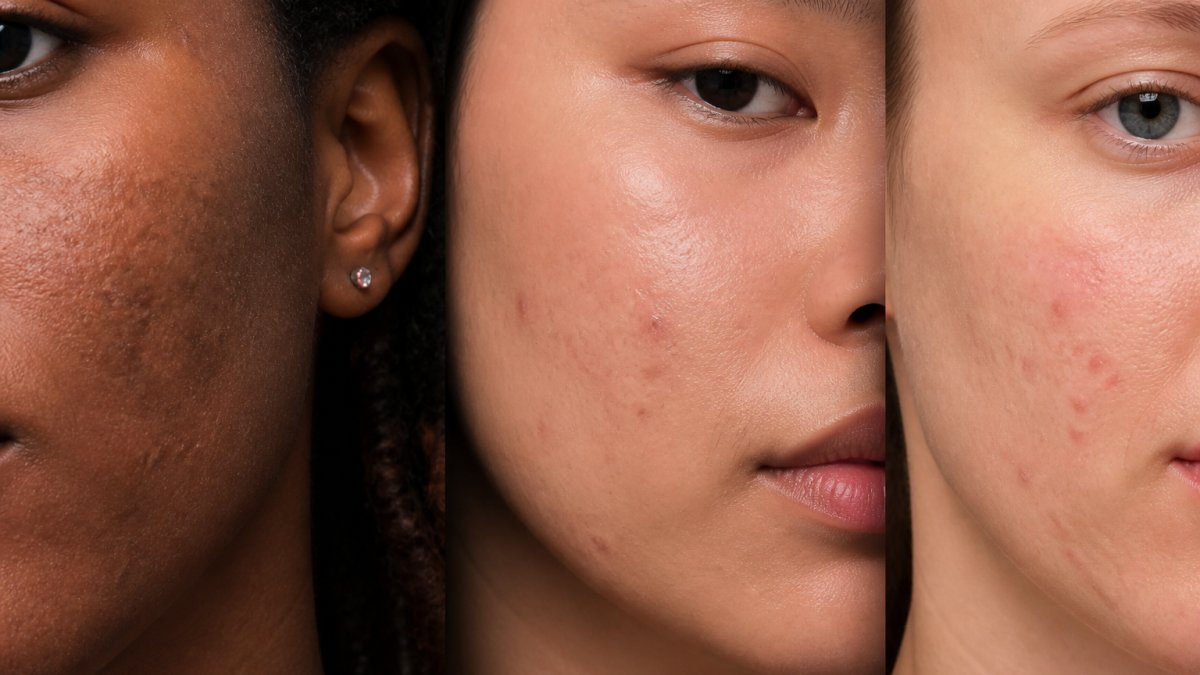
Types of Atrophic Scars
Atrophic scars, the most common form, are indented areas where skin lost collagen during healing. Boxcar scars are broad, angular depressions with defined edges; rolling scars look wavy due to fibrous bands beneath the skin; ice pick scars are narrow, deep punctures. Boxcar and rolling scars often improve with microneedling or laser resurfacing, while ice pick scars frequently need more aggressive approaches like chemical peels. For sensitive skin, aggressive techniques risk irritation and barrier damage.
Red and Brown Discoloration
Post-acne marks include red marks (erythema) and brown spots (hyperpigmentation) from inflammation rather than structural loss. Red marks typically fade within 6-12 months as blood vessels normalize; brown spots persist longer, especially in darker skin tones, because melanin deposits take time to break down. Many people mistake these temporary marks for permanent scars and pursue unnecessary treatment. If discoloration is the only concern, topicals and sun protection often resolve it without professional procedures, important for sensitive skin, where avoiding unnecessary procedures prevents barrier disruption and irritation cycles.
Best Acne Scar Treatment for Sensitive Skin
Choosing the best acne scar removal sensitive skin means matching treatment intensity to skin tolerance while addressing the specific scar type. Sensitive skin shows heightened reactivity to irritants, faster barrier disruption, and longer recovery times, so gentler options, topicals and lower-intensity procedures, come first, before escalating to aggressive resurfacing. Every treatment and skincare routine is customized to your individual skin needs, with a focus on understanding and addressing the root causes of your concerns.
Sensitivity Assessment and Patch Testing
Before any acne scar removal treatment, sensitive skin requires a formal sensitivity assessment to identify irritants, establish a barrier function baseline, and set realistic healing expectations. Patch testing, applying a small amount to a hidden area and monitoring for 24-48 hours, reveals how skin will respond. Watch for redness lasting beyond two hours, swelling, burning, or flaking. Skipping this step causes unnecessary irritation and delays results by weeks; for sensitive skin it is non-negotiable, preventing barrier damage and allowing treatment strength to be adjusted.
Acne Scar Removal Cream: Topical Options for Sensitive Skin
Topicals are the gentlest entry point for acne scar removal for sensitive skin, stimulating collagen, gradually improving texture, and addressing discoloration without physical trauma. The advantages: no downtime, no barrier disruption from needling or heat, and the ability to stop immediately if irritation develops. Results take longer than professional procedures, typically 8-12 weeks, but the low-risk profile suits baseline treatment or maintenance between sessions.
Retinoids and Retinol for Collagen Production
Retinoids accelerate cell turnover and stimulate collagen remodeling, making them foundational for acne scar appearance. Retinol (the weakest form) and prescription retinoids (tretinoin, adapalene) bind to retinoid receptors, triggering collagen synthesis and faster renewal. For sensitive skin, start with the lowest concentration and slowest frequency: twice-weekly application initially, advancing to three times weekly as tolerance builds. Retinoids increase sun sensitivity, so daily SPF 30+ is non-negotiable, UV exposure can worsen hyperpigmentation and undo collagen-building progress. Visible improvement takes 12-16 weeks, making retinoids best for post-acne marks and mild textural irregularities rather than deep depressed scars.
Gentle Chemical Peels and Barrier Repair
Chemical peels use acids (glycolic, lactic, salicylic) to dissolve the outer skin layer, triggering controlled renewal and collagen activation. For sensitive skin, low-concentration, short-duration peels beat aggressive formulations; glycolic and lactic acid peels are gentler than salicylic because they work more superficially. A typical protocol uses 10-20% glycolic acid for 3-5 minutes every 2-4 weeks. Between peels, barrier repair is essential: ceramides, niacinamide, and hyaluronic acid restore the barrier and reduce irritation risk. Underestimating barrier repair causes cumulative irritation, worsening hyperpigmentation and delaying improvement, recovery care between sessions often separates treatments that work from those that don’t.
Microneedling for Acne Scars: Controlled Skin Injury Without Harsh Chemicals
Microneedling creates controlled micro-injuries that trigger the skin’s healing response, stimulating collagen and remodeling depressed scars. Unlike peels or lasers, it uses no heat or chemical dissolution, suiting sensitive skin at appropriate depths. Fine needles (typically 0.5-2.0mm) create channels that activate fibroblasts, the cells responsible for collagen synthesis. For acne scar removal for sensitive skin, 0.75-1.0mm balances efficacy with tolerability, while deeper penetration (1.5-2.0mm) risks excessive inflammation.
How Microneedling Triggers Collagen Remodeling
Microneedling works through three healing phases. In the inflammatory phase (days 1-3), the body recognizes micro-injuries and mobilizes immune cells, controlled and brief compared to aggressive resurfacing. In the proliferative phase (days 3-21), fibroblasts synthesize new collagen and extracellular matrix, gradually filling depressed scars. In the remodeling phase (weeks 4-12), new collagen matures and cross-links into stronger, more organized tissue, directly addressing the structural loss that defines true acne scars. For sensitive skin, this controlled process means less systemic irritation than lasers or chemicals, though localized redness and mild swelling are normal for 24-48 hours.
Recovery and Skin Barrier Care Between Sessions
Recovery after microneedling requires deliberate barrier support. For the first 24 hours, cleanse gently, avoid active ingredients, and apply hydrating serums with hyaluronic acid and ceramides. A practical protocol: lukewarm water and a gentle cleanser, a hydrating serum, then a barrier-repair moisturizer. Avoid retinoids, vitamin C, and acids for at least 3-5 days. Sun protection is absolute, SPF 30+ daily, reapplied every two hours outdoors. Between sessions (typically 4-6 weeks apart), continue ceramide-rich moisturizers and gentle hydration. Most people see meaningful improvement after 3-4 sessions, though depressed scars may need 6+ treatments.
Laser Treatment for Acne Scars: Resurfacing Without Aggravation
Laser resurfacing uses focused light energy to remove damaged skin layers and stimulate collagen remodeling. Fractional lasers treat a portion of skin, leaving untreated areas to accelerate healing; ablative lasers remove the entire outer layer. For sensitive skin, fractional lasers are typically preferred for their reduced downtime and irritation. Common fractional lasers include CO2 and erbium, each with different wavelengths and penetration depths. The challenge is managing post-treatment inflammation and ensuring proper barrier recovery.
Fractional vs. Ablative Lasers for Sensitive Skin
Fractional lasers create microscopic columns of treatment separated by untreated skin, allowing faster healing and reduced systemic inflammation. Fractional CO2 lasers penetrate deeply and suit moderate to severe depressed scars, though they carry higher irritation risk for sensitive skin. Fractional erbium lasers are gentler, with shallower penetration and less heat diffusion, better for sensitive skin or mild-to-moderate scarring. Ablative lasers remove the entire epidermis and portions of the dermis, creating dramatic collagen stimulation but requiring 10-14 days of visible downtime; for sensitive skin they’re rarely first-line, reserved for severe scarring when other options plateau.
Downtime and Sun Protection Protocols
Fractional laser downtime typically spans 5-7 days of visible redness and mild swelling, with complete healing in 2-3 weeks; ablative downtime extends to 10-14 days of crusting and peeling. During this window, sensitive skin needs meticulous barrier support: gentle cleansing, hydrating serums, and occlusive moisturizers applied multiple times daily. Avoid all active ingredients, retinoids, acids, vitamin C, for at least 1-2 weeks. Sun protection is critical: SPF 50+ every 2 hours outdoors, plus hats and sun-protective clothing. UV exposure during healing can trigger hyperpigmentation, especially in darker skin tones, undoing the treatment’s benefits.
Treatment Selection by Scar Type, Skin Tone, and Sensitivity Level
Effective acne scar removal for sensitive skin requires matching treatment to scar type, skin tone, and individual tolerance. A one-size-fits-all approach fails because depressed scars, discoloration, and barrier sensitivity each demand different strategies; the best outcomes combine professional assessment with customized sequencing.
Depressed Scars: Boxcar, Rolling, and Ice Pick
Boxcar scars respond well to microneedling and fractional lasers, which remodel collagen in the scar base. Rolling scars, created by fibrous bands, sometimes benefit from subcision (releasing the fibrous bands) before microneedling or laser. Ice pick scars are notoriously difficult because their narrow, deep structure limits what topicals or gentle procedures can achieve; they often require repeated microneedling or more aggressive laser settings. For sensitive skin with ice pick scars, prioritize barrier support between treatments and accept that complete resolution may require 8+ sessions rather than 4-6.
Realistic Timelines, Cost, and Expected Improvement
Realistic expectations prevent disappointment and treatment abandonment. Topicals alone typically improve mild scarring by 20-30% over 12-16 weeks, with best results on discoloration. Microneedling improves moderate depressed scars by 40-60% over 4-6 sessions spaced 6 weeks apart, a 5-6 month timeline. Laser resurfacing can improve moderate scarring by 50-70% in 2-3 sessions spaced 6-8 weeks apart, requiring 4-5 months. Severe depressed scars rarely exceed 60-70% improvement even with aggressive combined approaches, and some residual texture often remains.
When to Consult a Dermatologist for Acne Scar Removal
Professional evaluation becomes essential when scarring is moderate to severe, when sensitive skin complicates treatment selection, or when at-home attempts haven’t delivered results.
Acne scarring affects confidence and self-esteem, and the path to improvement requires matching treatment intensity to skin tolerance. Sensitive skin demands a deliberate, barrier-conscious approach that prioritizes collagen stimulation without unnecessary irritation. Whether starting with topical treatments, microneedling, or laser resurfacing, the foundation is always the same: honest assessment of scar type, realistic timelines, and meticulous barrier care between treatments.
| Treatment Type | Timeline to Results | Sessions Required | Best For | Sensitive Skin Suitability |
|---|---|---|---|---|
| Topical Retinoids | 12-16 weeks | Ongoing daily use | Mild texture, discoloration | High, no downtime |
| Chemical Peels | 8-12 weeks | 4-6 treatments | Post-acne marks, mild scars | Moderate, requires barrier care |
| Microneedling | 5-6 months | 4-6 sessions | Moderate depressed scars | Moderate-High, controlled injury |
| Fractional Laser | 4-5 months | 2-3 sessions | Moderate-severe scars | Moderate, requires sun protection |
| Ablative Laser | 3-4 months | 1-2 sessions | Severe scars | Low, significant irritation risk |
Patch testing before any new treatment, whether topical or professional, is non-negotiable for sensitive skin. A 24-48 hour test on a hidden area reveals exactly how your skin will respond and prevents wasting time on treatments your barrier can’t tolerate.
Skipping sun protection during and after acne scar treatments, especially in sensitive skin or darker skin tones, can trigger post-inflammatory hyperpigmentation that requires additional treatment to resolve. This single mistake extends recovery timelines by weeks or months.
Research on microneedling efficacy from the Journal of Cosmetic Dermatology demonstrates that controlled micro-injury consistently stimulates collagen remodeling across skin types. FDA guidance on laser devices for skin resurfacing provides safety parameters for professional laser use, ensuring treatments meet clinical standards for efficacy and safety.
Frequently Asked Questions
How can I tell whether I have acne scars or post-acne marks?
True acne scars involve permanent changes to skin texture and structure, while post-acne marks are surface-level discoloration that fade over time. Scars feel indented (depressed) or raised (hypertrophic) when you run your finger across them. Marks appear as red, brown, or purple discoloration but remain smooth to the touch. A dermatologist can assess your skin during a consultation to determine which you have and recommend appropriate treatment.
Which acne scar treatments are suitable for sensitive skin?
Topical treatments with gentle retinoids, niacinamide, and peptides work well for sensitive skin without aggressive irritation. Microneedling at lower needle depths offers controlled skin injury without harsh chemicals. Fractional laser treatments provide resurfacing with less downtime than ablative options. Start with patch testing on a small area, and space treatment sessions further apart to allow your skin barrier to recover fully between sessions.
Is microneedling worth it for acne scars?
Microneedling triggers collagen production and skin remodeling, making it effective for depressed scars, boxcar scars, and rolling scars. Results typically appear after 3-6 sessions spaced 4-6 weeks apart. Many people see 40-60% improvement in scar appearance. For sensitive skin, microneedling is often preferred over laser because it avoids heat-based irritation, though recovery requires careful barrier repair and sun protection.
Can sensitive skin use retinoids to improve acne scars?
Yes, but start low and go slow. Retinoids boost collagen production and cell turnover, improving scar texture over time. For sensitive skin, begin with a low-strength retinol (0.25-0.3%) and use it only 2-3 times per week, gradually increasing frequency as tolerance builds. Always pair retinoids with a strong moisturizer and broad-spectrum SPF 30+ during the day, as they increase sun sensitivity.