

Table of Contents
- Understanding Sun Damage and Its Signs
- Professional Treatment Options for Sun-Damaged Skin
- How Long Does Sun Damage Treatment Take
- Building a Sun-Damaged Skin Care Routine at Home
- Choosing the Right Treatment for Your Skin Tone and Damage Type
- When to Seek Professional Help and What to Expect
- Frequently Asked Questions
Last Updated: October 14, 2026
Understanding Sun Damage and Its Signs
To fix sun-damaged skin, you need to understand how UV rays break down collagen and elastin.
Common signs of sun damage include:
- Brown spots or dark patches on the face, hands, and arms
- Fine lines and wrinkles that appear deeper than age alone explains
- Rough, leathery texture across sun-exposed areas
Once sun damage occurs, it doesn’t reverse on its own. Addressing it requires professional treatment plus consistent home care, and early intervention improves outcomes.
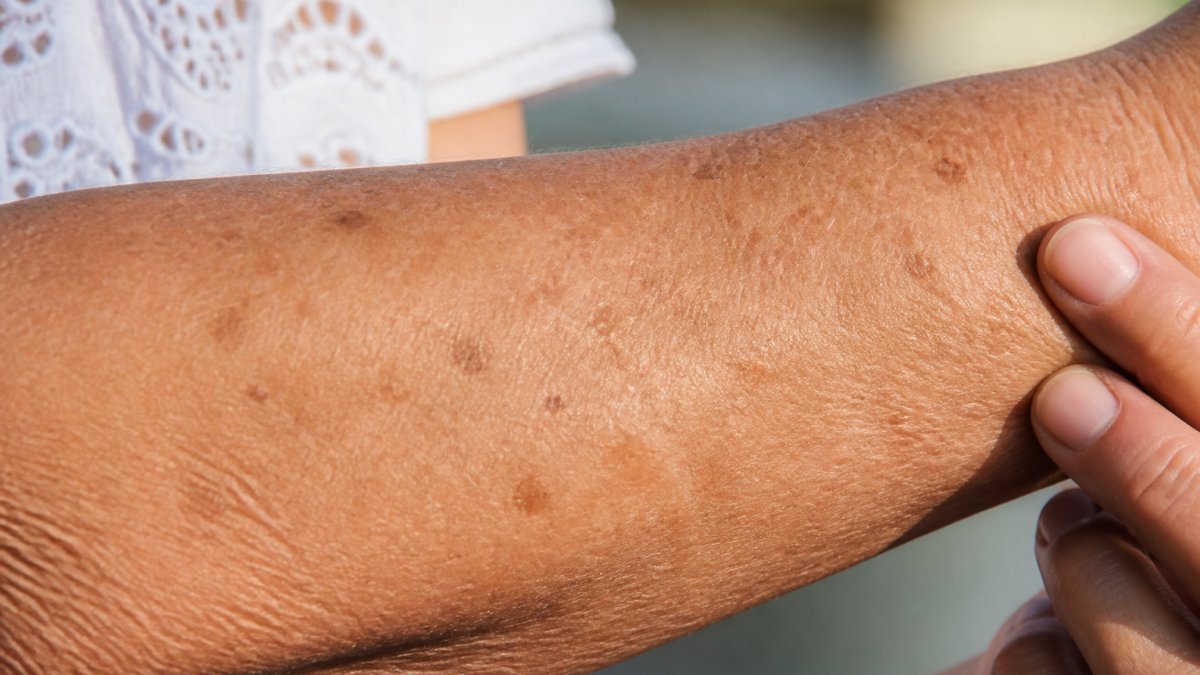
Professional Treatment Options for Sun-Damaged Skin
Professional treatments help fix sun damaged skin by targeting damaged outer layers and stimulating collagen beneath the surface, penetrating deeper than home products to trigger the skin’s healing response.
Chemical Peel for Sun Damage
A chemical peel uses acids to dissolve the damaged outer skin layer, revealing fresher skin underneath. It works well for brown spots, rough texture, and mild sun-damage wrinkles.
Peels come in different strengths: light peels need minimal downtime and repeat every few weeks, medium peels give more dramatic results with several days of redness and peeling, and stronger peels deliver significant improvement with longer recovery.
The provider applies the solution, leaves it for a set time, then neutralizes it. Patients feel warmth, and results appear gradually as skin heals.
Laser Skin Rejuvenation for Sun Damage
Laser treatments use focused light energy to remove damaged skin and stimulate deep collagen, working for brown spots, fine lines, rough texture, and uneven tone.
The laser creates controlled injury, triggering repair. As skin heals, new collagen replaces damaged tissue and results improve over weeks.
Laser skin rejuvenation for sun damage typically requires multiple sessions spaced four to six weeks apart, with noticeable improvement after two to three treatments.
Light-Based and Microdermabrasion Treatments
Intense pulsed light (IPL) uses broad-spectrum light to target brown spots and improve texture, best for lighter skin tones and shallower damage.
Microdermabrasion uses crystals or a diamond tip to physically exfoliate the outer layer.
Combination treatments often work best, IPL for brown spots plus a laser for fine lines and texture. Customizing to your damage pattern beats one treatment alone.
How Long Does Sun Damage Treatment Take
Timelines depend on three variables: damage depth, modality used, and how consistently you protect skin between sessions. Patients who understand this up front are far more satisfied than those expecting one appointment to erase years of photodamage.
Session counts and spacing by treatment type
- Light chemical peels: typically 3 to 6 sessions, spaced 4 to 8 weeks apart. Superficial peels (glycolic, lactic, mandelic) are often repeated every 2 to 4 weeks.
- Medium peels (TCA-based): usually 1 to 3 sessions, spaced 6 to 12 weeks apart, because the skin needs longer to rebuild after deeper exfoliation.
- Fractional laser (non-ablative): commonly 2 to 4 sessions, spaced 4 to 6 weeks apart.
A single session usually runs 30 to 60 minutes for the face, longer for face, neck, chest, and hands together.
Why the calendar is longer than the appointment
Collagen remodeling is the slow step: after controlled injury, fibroblasts lay down new collagen over weeks and months, with tightening and texture improvement peaking 8 to 12 weeks after the final session. Pigment clears faster, with brown spots often darkening slightly then flaking or fading over 1 to 3 weeks per session.
A realistic expectation is:
- Weeks 1-2: redness, mild swelling, or peeling depending on intensity.
- Weeks 3-6: early brightening, fading of superficial pigment.
- Months 2-3: texture and fine-line improvement becomes noticeable.
- Months 3-6: collagen remodeling continues; results consolidate.
Downtime, honestly stated
Downtime scales with intensity, not price. Light peels and microdermabrasion allow same-day return with mild pinkness; medium peels involve 3 to 5 days of peeling; non-ablative fractional laser means 3 to 5 days of redness coverable with mineral makeup; ablative fractional laser requires 7 to 14 days of social downtime with oozing, crusting, and strict sun avoidance.
Risks and limitations worth knowing before you book
- Post-inflammatory hyperpigmentation (PIH): darker skin tones are at higher risk, especially with aggressive settings or inadequate pre-treatment preparation.
- Hypopigmentation: lighter skin tones can develop light spots after repeated or overly aggressive resurfacing.
- Cold sore reactivation: anyone with a history of oral herpes should discuss antiviral prophylaxis before laser or medium-depth peels.
- Incomplete clearance: deep dermal pigment and melasma often improve but do not fully resolve; they require ongoing maintenance.
Maintenance is part of the timeline
Results fade if sun exposure continues. A common pattern is one maintenance session every 6 to 12 months plus daily broad-spectrum sunscreen and topical retinoid or vitamin C. Without maintenance, pigment and texture often regress within a year.
What treatment actually costs
Pricing varies by provider, modality, and treatment area. As a framework:
- Light chemical peels: typically the lowest per-session cost, which is why series pricing is common.
- Medium peels and IPL: mid-range per session, often sold in packages of 3 to 6.
- Non-ablative fractional laser: higher per session, usually 2 to 4 sessions.
- Ablative fractional laser: the highest single-session cost, but often only one session is needed.
When comparing quotes, ask whether the price includes consultation, numbing, post-treatment products, and follow-ups. A low per-session price with mandatory add-ons is rarely the better deal. Also ask about package pricing and what happens if you need more sessions than estimated.
American Academy of Dermatology, sun damage and skin cancer information
Building a Sun-Damaged Skin Care Routine at Home
Professional treatments work best with a solid home care routine.
Start with a gentle cleanser that removes oil and debris without stripping skin.
Sunscreen is non-negotiable: broad-spectrum SPF 30 or higher daily, even on cloudy days, reapplied every two hours outside.
Add a vitamin C serum or retinol to boost collagen.
Hydration matters. Use a moisturizer suited to your skin type; sun-damaged skin is often dehydrated, making fine lines more visible.
Choosing the Right Treatment for Your Skin Tone and Damage Type
Treatment selection is a matching problem, not a menu. The right choice depends on three inputs: skin tone (Fitzpatrick type), type and depth of damage, and medical history and medications. Skipping any is how patients end up with disappointing results or avoidable complications.
Step 1: Identify the damage type
Sun damage is not one condition, it presents in layers, each responding to different tools.
- Epidermal pigment (superficial brown spots, freckling): responds well to IPL, light chemical peels, and topical retinoids.
- Dermal pigment (deeper brown patches, melasma): responds poorly to IPL and light peels; often needs low-fluence laser, oral or topical tranexamic acid, or hydroquinone-based regimens under supervision.
- Vascular changes (facial redness, broken capillaries from chronic UV): targeted at vascular lasers or IPL, not at pigment-focused devices.
- Texture and fine lines (collagen and elastin loss): requires resurfacing, fractional laser, medium-depth peel, or microneedling with radiofrequency.
Most patients have a mix, so combination plans outperform single-modality plans.
Step 2: Match to skin tone
Fitzpatrick skin type is the standard framework, from Type I (always burns, never tans) to Type VI (deeply pigmented, never burns).
- Types I-II: broadest range of options, including ablative and non-ablative fractional laser, IPL, and medium peels. Higher risk of hypopigmentation with aggressive resurfacing.
- Types III-IV: non-ablative fractional laser, low-fluence Q-switched laser, and gentle serial peels are generally preferred. Pre-treatment with a topical retinoid and hydroquinone for 2 to 4 weeks reduces PIH risk.
- Types V-VI: the safest options are often microneedling, low-fluence Q-switched Nd:YAG laser, and very superficial peels (mandelic acid, low-concentration glycolic). Aggressive resurfacing carries a meaningful risk of PIH and, rarely, hypopigmentation or scarring.
Darker skin tones generally do better with more sessions at lower intensity than fewer at higher intensity, slower but safer.
Step 3: Screen medical history and medications
This is where most online guides stop, and it most affects safety.
- Isotretinoin (Accutane) history: many providers recommend waiting 6 to 12 months after the last dose before ablative resurfacing, due to scarring risk.
- Anticoagulants and antiplatelets: increase bruising risk; may require coordination with your prescribing physician.
- Photosensitizing medications: tetracyclines, some diuretics, and certain antibiotics increase reaction risk with IPL and laser.
- History of cold sores: antiviral prophylaxis is standard before laser or medium peels.
Step 4: Ask the right questions at consultation
A consultation should feel like matching, not a sales pitch. Bring these questions:
- What Fitzpatrick type am I, and how does that change your recommendation?
- What specific device or peel are you recommending, and why that one over alternatives?
- How many sessions, at what intervals, and what is the total estimated cost?
- What are the realistic risks for my skin tone and history?
- What does the recovery look like week by week?
- What is the maintenance plan after the series ends?
- Who performs the treatment, a physician, a nurse, or an esthetician, and what is their experience with my skin tone?
A note on lesion triage
Before any cosmetic treatment, examine your skin for the ABCDE warning signs of possible skin cancer:
- Asymmetry
- Border irregularity
- Color variation within a single lesion
- Diameter larger than a pencil eraser (about 6 mm)
Any lesion meeting these criteria, or any sore that bleeds or fails to heal within a few weeks, should be evaluated by a dermatologist before cosmetic treatment. Cosmetic resurfacing over an undiagnosed skin cancer can delay diagnosis and complicate treatment.
Why a consultation is not optional
Two patients with identical-looking brown spots can need completely different plans because of skin tone, medication history, or pigment depth. Online quizzes and galleries cannot substitute for an in-person assessment under proper lighting with a trained eye, and a provider who rushes you through should be a red flag.
When to Seek Professional Help and What to Expect
Knowing when to seek professional treatment prevents wasting time on ineffective home remedies.
The provider should explain realistic outcomes, risks, session counts, downtime, and aftercare.
Ask about the provider’s experience treating sun damage in your skin tone, since technique and equipment selection vary by skin type.
Sun-damaged skin responds well to professional treatment combined with consistent home care.
Frequently Asked Questions
Can I repair sun-damaged skin without professional treatment?
Mild sun damage responds well to a consistent at-home sun-damaged skin care routine using medical-grade sunscreen, retinoids, and antioxidants. These address early signs like dullness and fine lines. However, deeper damage such as significant brown spots, rough texture, and pronounced wrinkles typically requires professional treatment like chemical peels or laser therapy to see meaningful improvement. A dermatologist or aesthetician can assess your damage and recommend the best approach for your situation.
How long does sun damage treatment take to show results?
Results depend on the treatment type. Chemical peels show improvement within 1-2 weeks, though multiple sessions may be needed. Laser skin rejuvenation for sun damage typically requires 3-6 sessions spaced 4-6 weeks apart, with visible results after the first treatment. Light-based treatments follow a similar timeline. Most people see meaningful improvement in brown spots, texture, and fine lines within 2-3 months of starting professional treatment, combined with proper home care and sun protection.
Which treatment works best for brown spots and uneven skin tone?
Chemical peels and laser treatments are most effective for hyperpigmentation and brown spots. A chemical peel removes damaged outer layers, while fractional laser targets pigment directly. Light-based treatments also reduce dark spots and uneven tone. The best choice depends on your skin tone, the depth of damage, and your downtime tolerance. Darker skin tones may benefit more from certain laser wavelengths to avoid complications. A consultation with a qualified professional helps determine which option suits your specific damage pattern and skin type.
How do I know if a changing spot needs medical attention?
Most sun damage appears as flat brown spots with stable borders and color. See a dermatologist if a spot changes in size, shape, color, or texture, becomes itchy or bleeds, or has irregular borders. These changes may indicate a concerning lesion requiring medical evaluation. Cosmetic sun damage like fine lines and rough texture is safe to treat with professional aesthetic procedures, but any suspicious spot should be assessed by a healthcare provider before pursuing cosmetic treatments.


