

Table of Contents
- How Chemical Peels Work for Acne Scars
- Types of Chemical Peels and Which Works Best for Scarring
- Chemical Peel Recovery Time: What to Expect
- Professional vs At-Home Chemical Peel: Why Professional Matters
- Cost of Professional Chemical Peel for Acne Scars
- Who Benefits Most from Chemical Peels for Scarring
- Potential Side Effects and Risk Considerations
- Long-Term Results and Maintenance
- Frequently Asked Questions
Last Updated: October 9, 2026
How Chemical Peels Work for Acne Scars
A professional chemical peel acne scars treatment is worth it when scars are mild to moderate and you’re committed to recovery.
As chemical exfoliants dissolve the epidermis, the body generates new skin cells and rebuilds collagen.
Most people see noticeable results after 3-6 sessions spaced 4-6 weeks apart, though results vary by scar severity and skin type. Each treatment plan is customized to your scarring pattern and skin needs.
The best candidates for chemical peels are those with shallow to moderate scars and realistic expectations about timeline. Deep, severe scarring may require combination treatments for optimal results.
Types of Chemical Peels and Which Works Best for Scarring
Chemical peels come in three depths, each suited to different scar types. Strength determines how much exfoliation and collagen remodeling occurs.
Superficial Peels
Superficial peels use mild exfoliants like glycolic or salicylic acid to remove only the outermost skin layer. Recovery is minimal, with slight redness fading within hours. They work best for very light scarring and post-inflammatory hyperpigmentation.
Superficial peels require frequent sessions (every 2-4 weeks), often 6-10 treatments, to improve shallow scars. The advantage is virtually no downtime; the drawback is limited effectiveness on deeper scarring.
Medium-Depth Peels
Medium-depth peels penetrate the upper dermis using stronger acids like trichloroacetic acid (TCA), creating more exfoliation and stronger collagen production. They’re the most effective option for moderate atrophic scars.
Recovery takes 7-10 days with visible peeling and redness, and most people need 2-4 sessions spaced 6-8 weeks apart. Medium-depth peels offer the best balance of effectiveness and recovery time for typical acne scarring.
Medium-depth peels are the most commonly recommended option for acne scars because they deliver visible results without requiring months of recovery.
Deep Peels
Deep peels use phenolic solutions to reach deep into the dermis, creating the most dramatic results for severe, extensive scarring. Recovery is intense: 2-3 weeks of significant peeling, redness, and sensitivity.
Deep peels typically require only 1-2 sessions and are reserved for severe scarring because risks are higher and recovery demanding. Darker skin tones face increased post-inflammatory hyperpigmentation risk, making deep peels less suitable for some patients.
Chemical Peel Recovery Time: What to Expect
For the first 48 hours after any peel, your skin barrier is compromised. Avoid water, exercise, and sun exposure, and use only recommended post-procedure products. Itching and tightness are common as new skin forms.
By day 3-5, visible peeling begins as damaged skin sheds to reveal fresh skin beneath. Resist picking or scrubbing and let peeling happen naturally.
After medium-depth peels, expect 1-2 weeks before feeling comfortable in public, with raw, patchy skin. Most redness fades by week 2-3, though some can persist.
Never rush back to normal activities after a chemical peel. Sweat, heat, and friction can trigger infection or increase hyperpigmentation risk. Wait until your dermatologist clears you.
Professional vs At-Home Chemical Peel: Why Professional Matters
At-home chemical peels contain much weaker exfoliants: store-bought peels typically use 5-10% glycolic acid, while professional peels use 20-70% concentrations.
Professional peels are applied by trained aestheticians or dermatologists who customize treatment to your scar type, monitor your skin to prevent over-treatment, and provide post-care guidance.
Professional treatment is worth it because results are faster, safer, and more dramatic: 2-3 professional peels typically outperform months of at-home treatments.
Cost of Professional Chemical Peel for Acne Scars
Pricing for a professional chemical peel depends on peel depth, treatment area, and provider credentials. Since the question is “is it worth it,” a cost-benefit framework by scar type is more useful than a single number.
Typical Price Ranges by Peel Depth
Across U.S. dermatology and med-spa practices, superficial peels (glycolic, salicylic, lactic, mandelic) commonly run in the $150-$300 per session range. Medium-depth peels (TCA 20-35%, Jessner’s plus TCA) typically run $300-$600 per session. Deep peels (phenol-based, such as the Baker-Gordon formula) are the most expensive, often $1,000-$3,000+ per session, and are usually performed by physicians rather than aestheticians.
Cost-Benefit by Scar Type
Not every scar type responds equally, so the “worth it” calculation changes with what you’re treating:
- Post-inflammatory hyperpigmentation (PIH) and shallow textural scarring: Superficial peels are the most cost-efficient path. A series of 6-10 superficial peels spaced 2-4 weeks apart often costs less than a single medium-depth session and carries minimal downtime. This is the best value tier.
- Rolling scars and mild boxcar scars: Medium-depth TCA peels are the workhorse. A typical plan of 2-4 sessions spaced 6-8 weeks apart is where most patients see the strongest return relative to cost, because TCA reaches the upper dermis where rolling and shallow boxcar depressions form.
- Icepick scars and deep boxcar scars: Peels alone rarely resolve these. Icepick scars are narrow and extend deep, so a surface peel cannot remodel the base of the tract. Expect to pair peels with subcision, punch excision, or fractional laser, which raises total cost significantly. If icepick scars are your primary concern, a peel-only plan is usually not the best use of money.
- Mixed scarring: Most acne scarring is mixed. A staged plan (medium-depth peel series first, then targeted procedures for residual icepick or tethered scars) usually delivers better value than committing to one modality.
What Drives the Total
Total cost is sessions multiplied by per-session price, plus post-care products and combination treatments.
The Comparison That Matters
Against at-home peels, the math isn’t close per result: an at-home glycolic peel used weekly for a year never reaches the dermis. A prescription retinoid works slower and doesn’t remodel established indentations like a medium-depth peel. Microneedling is often comparable in price per session but is favored for rolling scars and darker skin tones due to lower PIH risk.
Peels are most cost-effective for PIH, rolling scars, and mild boxcar scars. For icepick and deep boxcar scarring, budget for combination treatment, not a peel-only series.
Because every plan is customized, the only way to get an accurate number is a consultation. Ask for a written plan that lists peel type, number of sessions, spacing, and any add-on procedures, so you can compare total cost rather than per-session price.
Who Benefits Most from Chemical Peels for Scarring
The best candidates for chemical peels have mild to moderate acne scarring and realistic expectations.
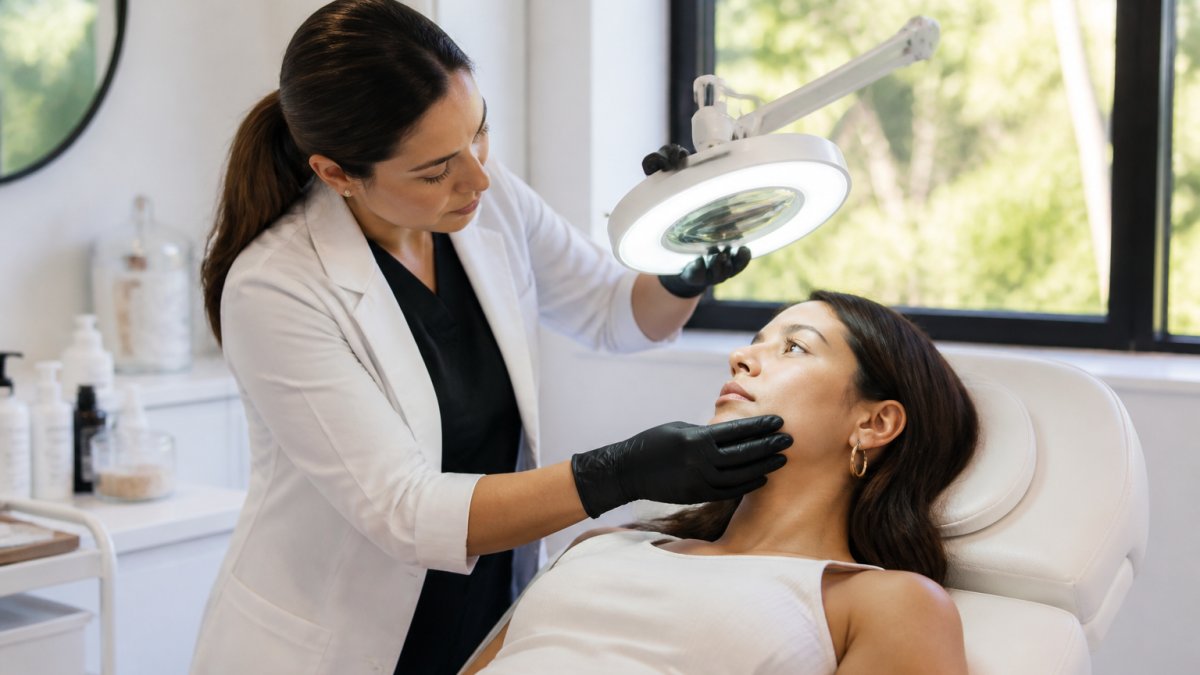
Age matters less than skin condition: teenagers with severe acne scarring and adults in their 50s can both benefit. The key is realistic expectations and commitment to recovery.
People with active acne should treat it first, since ongoing breakouts create new scars while you treat old ones.
Chemical peels work best for people with moderate indented scars, realistic timelines (3-6 months for full results), and commitment to sun protection and post-care instructions.
Potential Side Effects and Risk Considerations
Common side effects include redness, peeling, itching, and temporary sensitivity. These are normal and expected.
More serious risks include infection, scarring from the peel itself, and hyperpigmentation or hypopigmentation.
Chemical burns are rare with professional application but possible if the chemical sits too long on the skin.
Allergic reactions to peel ingredients are uncommon but possible.
People with active rosacea, severe eczema, or open wounds should not get chemical peels until these conditions are controlled.
Long-Term Results and Maintenance
Chemical peel results for acne scars are long-lasting because they create permanent collagen remodeling. The new collagen fibers that form during healing remain, so scar improvement does not disappear after a few months the way topical treatments do. But “permanent” is not the same as “finished,” and the timeline most articles skip is the part that actually determines whether you stay happy with your results.
Session-by-Session: What Actually Happens
A realistic medium-depth peel series for moderate atrophic scarring looks like this:
- Session 1 (week 0): Visible peeling days 3-5, redness resolving by day 7-10. Early textural change is subtle. Most patients see a slight smoothing of shallow scars and a reduction in PIH.
- Session 2 (week 6-8): Collagen from session 1 is still maturing. Peeling is similar, but the skin underneath looks noticeably more even. Rolling scars begin to soften.
- Session 3 (week 12-16): This is where most patients report the first “real” change in indented scarring. Boxcar edges look less defined.
- Months 4-12: Collagen continues to remodel for 6-12 months after the final peel. Results at month 3 are not the final result. Judging too early leads to unnecessary repeat treatments.
A common pattern is that patients see 40-60% improvement in moderate scarring after a full medium-depth series, with the remainder addressed through combination treatment or accepted as the new baseline. Deep, tethered, or icepick scars will not resolve from peels alone regardless of how many sessions you do.
Maintenance Roadmap (12-24 Months)
Once the active series ends, maintenance is what protects the investment:
- Months 0-6 post-series: Daily broad-spectrum SPF 30+ is non-negotiable. UV exposure breaks down the new collagen you just paid for. Barrier-supportive skincare (ceramides, gentle cleansers, no aggressive scrubs) keeps remodeling on track.
- Months 6-12: Consider one superficial or light medium-depth maintenance peel if texture is drifting or new PIH appears. Many patients skip this and are fine.
- Months 12-24: Annual or biennial maintenance peels are common for people who want to keep improving texture or address new breakouts. Others find one series holds for years.
- Ongoing: If active acne returns, treat it immediately. New inflammatory lesions create new scars, and no maintenance peel will outrun ongoing breakouts.
Skin Tone Considerations for Maintenance
This is where most content stays vague, and it matters. For Fitzpatrick skin types IV-VI, the maintenance plan changes:
- Higher PIH risk: Any inflammation, including the peel itself, can trigger post-inflammatory hyperpigmentation. Maintenance peels should stay superficial to light-medium, with priming (hydroquinone, azelaic acid, or vitamin C) for 2-4 weeks before each session.
- Longer spacing: Rather than 2-4 week superficial intervals, many practitioners extend to 4-6 weeks for darker skin tones to let pigment settle.
- Aggressive sun protection: The margin for error is smaller. A single unprotected sun exposure during healing can undo months of progress.
- Provider selection: Look for a provider experienced with Fitzpatrick IV-VI. Depth judgment on darker skin is a skill, not a default.
What Undermines Long-Term Results
Three things reliably erode peel results: unprotected sun exposure, picking or scrubbing during healing, and untreated active acne. None of these are exotic, and all three are within your control. Medical-grade skincare supports barrier health and collagen production, but it does not replace sun protection or acne control.
The peel series is the beginning, not the end. Plan for 12-24 months of sun protection, acne control, and periodic maintenance to hold your results, and adjust the cadence if you have a darker skin tone.
The comprehensive approach includes a personalized skincare routine and a maintenance schedule designed to protect and extend your peel results over the long term.
Frequently Asked Questions
How many professional chemical peels are needed for acne scars?
The number of sessions depends on scar severity, depth, and scar type. Superficial peels may require 4-6 sessions spaced 2-4 weeks apart for noticeable improvement, while medium-depth peels often show results in 1-3 sessions. Deep peels typically require only one treatment but involve significant downtime. A dermatologist can assess your scarring and recommend a realistic timeline during a consultation.
What is the difference between professional and at-home chemical peels?
Professional peels use higher concentrations of chemical exfoliants (glycolic acid, salicylic acid, or trichloroacetic acid) applied in a clinical setting with medical supervision. At-home peels contain much lower concentrations and lack the expertise of a trained professional. Professional treatments penetrate deeper into the dermis for scar remodeling, while at-home options typically address surface exfoliation only. Professional peels also include proper pre- and post-procedure care protocols that minimize complications.
How long do results from a professional chemical peel last?
Results depend on peel depth and your skin’s regeneration rate. Superficial peels improve texture for 4-6 weeks before fading, requiring maintenance sessions. Medium-depth peels can provide visible scar improvement for 6-12 months, with some benefits lasting longer. Deep peels offer the most lasting results, with improvements potentially lasting years. However, ongoing sun protection and skincare maintenance are essential to preserve results, as continued sun exposure and skin aging can gradually diminish benefits.
Are professional chemical peels safe for all skin types?
Professional chemical peels can be performed on most skin types, but certain skin tones carry higher risks for post-inflammatory hyperpigmentation, especially with medium and deep peels. Darker skin requires modified peel concentrations, longer intervals between sessions, and specialized post-procedure care. Those with active acne, rosacea, or compromised skin barriers may need to address these conditions first. A qualified dermatologist should evaluate your specific skin type and medical history to determine safety and appropriate peel depth.


